
Problems we solve
Separation anxiety training for dogs in York & East Yorkshire
Fine when you are in, howling the house down the second you leave. Separation anxiety is real, it is miserable for everyone, and the standard advice often lets owners down.
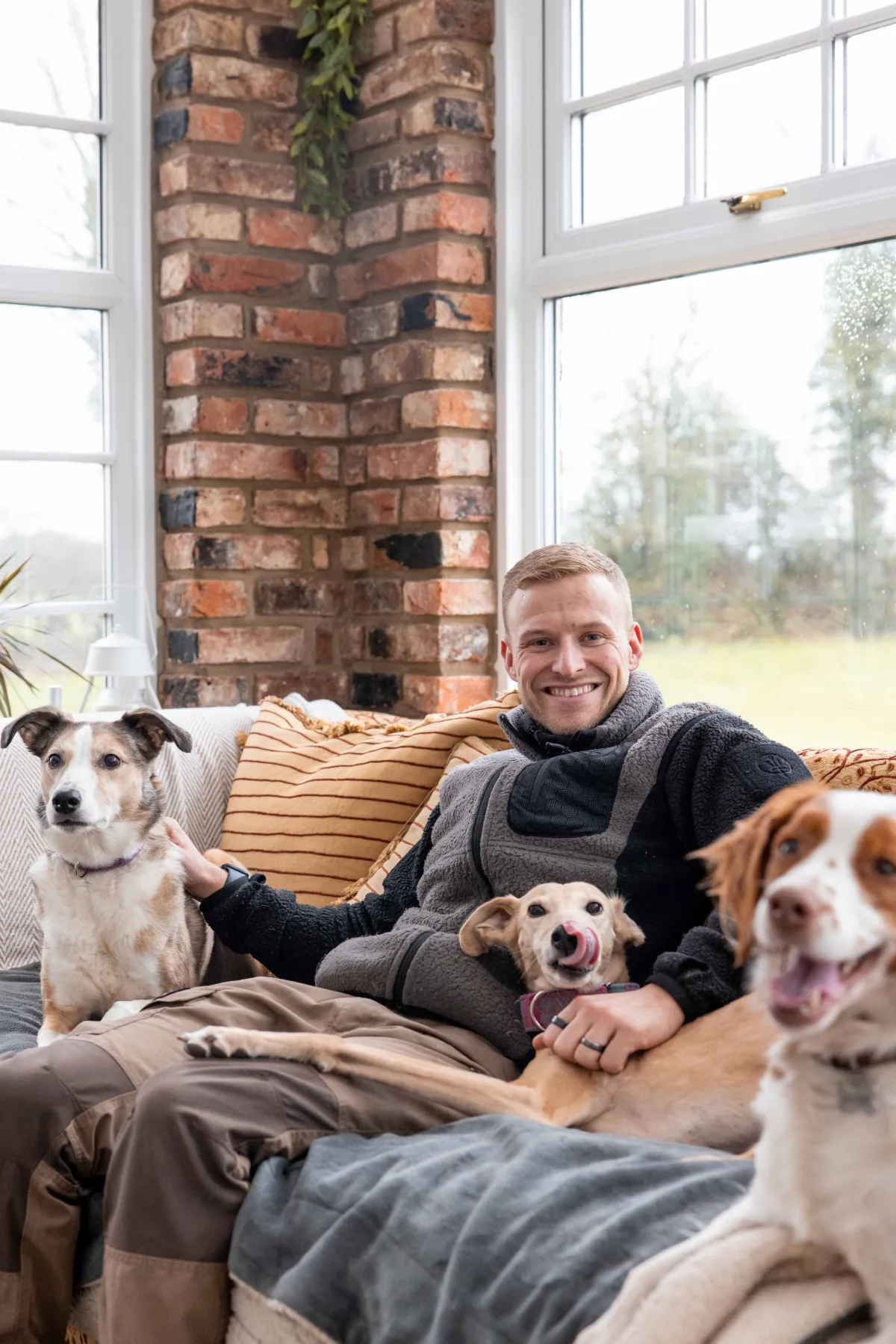
Most advice works on the doorway. The dog is struggling because they have no off switch, so we fix the day underneath: rest, structure and a place to switch off.
Signs and causes
Signs of separation anxiety, and what else it could be
- When you leave
- Barking, howling or whining that starts soon after you go and keeps going. Scratching at doors, chewing door frames, digging at carpets.
- Before you leave
- Drooling, panting or pacing before you have even got your shoes on, and following you from room to room.
- Toileting
- Toileting indoors when left, from a dog who is otherwise clean.
- Or something else
- Some dogs are bored. Some have learned that noise brings you back. Some have never been taught to switch off. The fixes are different, so we work out which it is at the first lesson.
- If you are not sure
- Set your phone to record the first 20 minutes after you go.
How we help
What actually helps a dog with separation anxiety
Every dog is different, so every plan starts with a free phone consultation.
- Rest. Adult dogs need 12 to 14 hours of proper rest a day. A dog who is rested is a dog who can cope.
- Crate rest as part of the day. Not only when you go out, or the crate becomes the signal that you are leaving.
- Structure in the home. Place work, sofa on invitation only, and calm behaviour is what gets attention, freedom and interaction.
- Fulfilment with a clear finish. A proper walk, a short structured play session, some training with their food, then rest.
- Boring departures and arrivals. Leave without a speech. Come home and say hello once they are calm.
- Then build the time. Once your dog can rest calmly in the crate while you are in the house, being left is a much smaller step.
Which training fits
Training for separation anxiety
-
1-2-1 Dog Training · £95 per lesson
The right starting point for most dogs: we assess what is really going on and give you a plan for your home. -
Residential Dog Training · From £125 per day
For dogs who are a long way down the road, a residential programme resets the whole routine in a structured environment and hands you back a dog who already knows how to rest.
Questions
Separation anxiety: your questions
Can’t see yours? Ask us on a free phone consultation, we reply within 24 hours.
Book a free consultationCan separation anxiety be cured?
For most dogs it can be reduced to the point where being left a few hours is a non-event. The ones that get there are the ones whose daily structure changes, not just the doorway routine.
Should I crate a dog with separation anxiety?
Yes, in most cases, but not only when you go out. Crate rest needs to be part of the day while you’re at home too, or the crate just becomes the sign that you’re leaving.
How long does it take?
It depends on the dog and on how consistently the house runs the plan. Dogs whose owners commit to the structure usually start to change within a few weeks. Severe cases take longer.
Should I get a second dog to keep them company?
Please don’t, not for this reason. Most dogs with separation anxiety are attached to people, not dogs, and you risk ending up with two anxious dogs.
Guides
Read more about separation anxiety
-
Separation anxiety in dogs: signs and what actually helps, from our York trainers
Signs of separation anxiety in dogs, why the usual advice fails, and how structure, rest and training help dogs in East Yorkshire settle when left. -
Day training or residential training in East Yorkshire: which suits your dog?
How our five-day Pathway Programme compares with residential training, and how to tell which one suits your dog and your routine at home.